Key Differences, Costs, and Best Applications Explained
Choosing between an MRL (Machine Room-Less) elevator and an MR (Machine Room) elevator is one of the most important decisions when planning a building’s vertical transportation system.
Both systems are widely used in residential, commercial, and high-rise projects. However, they differ significantly in space requirements, cost, performance, and long-term maintenance.
Understanding the difference between MRL and MR elevators helps developers, architects, and building owners select the right system for their specific project needs — avoiding costly mistakes and ensuring long-term efficiency.
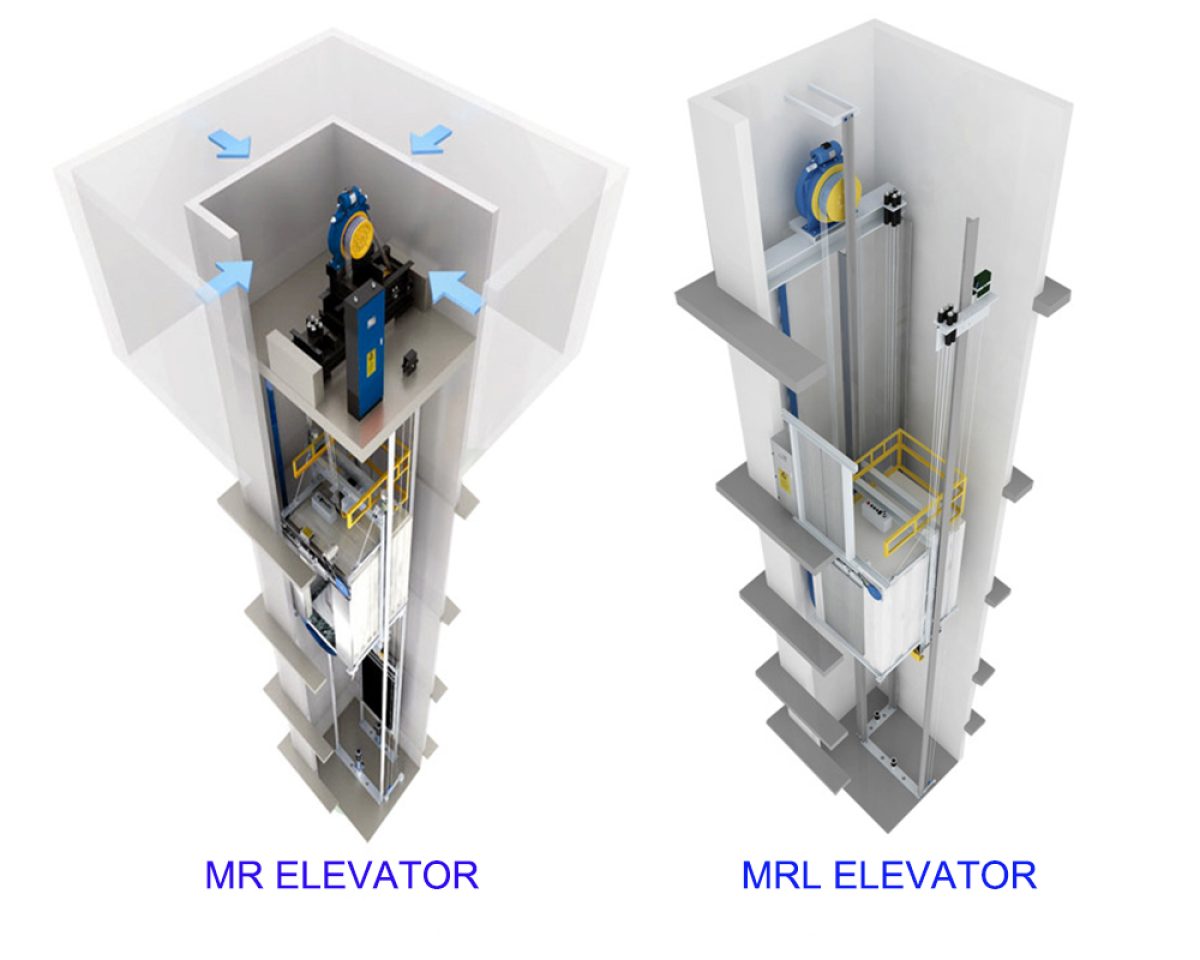
When choosing between different types of elevators, the most common decision you'll face is between a machine room-less (MRL) model and a traditional machine room (MR) one. The main difference lies right in their names. An MR elevator requires a separate machine room, typically at the top of the building, to house the motor and control systems. In contrast, an MRL elevator integrates all this equipment directly into the elevator shaft, eliminating the need for an extra room.
Feature | MRL Elevator | MR Elevator |
|---|---|---|
Machine Room | Not required | Required |
Space Usage | Compact | Larger footprint |
Installation | Faster | More complex |
Maintenance Access | Limited space | Easier access |
Speed Capability | Moderate | High-speed capable |
Initial Cost | Lower | Higher |
Best Application | Low to mid-rise | High-rise buildings |
Not sure which elevator fits your project?
Request a professional recommendation based on your building type and requirements.
An MR (Machine Room) elevator is a traditional elevator system that relies on a dedicated machine room to function. This separate space, usually located above the elevator shaft, houses the core components like the traction machine, control cabinet, and speed governor. This setup has been the standard for many years, offering a reliable and robust solution for vertical transportation. The machine room provides ample space for technicians to work, making maintenance and repairs more straightforward.
The design of an MR elevator involves the traction machine in the machine room using wire ropes to move the elevator car up and down the shaft. While effective, this configuration requires significant building space for the dedicated machine room, which can impact architectural design and increase construction costs. It’s a proven technology that is well-suited for buildings that can accommodate the extra space and prioritize easy maintenance access.
An MRL (Machine Room-Less) elevator represents a modern approach to elevator design, a key benefit being its excellent space efficiency. Unlike traditional models, an MRL elevator does not require a separate machine room. Instead, its core components, such as the compact traction machine and control equipment, are cleverly integrated within the elevator shaft itself. Typically, the motor is placed at the top of the shaft, and the control cabinet is embedded into the side wall.
This innovative design frees up valuable building space that would otherwise be used for a machine room, which is a major advantage for projects with spatial constraints or those aiming to maximize usable area. By eliminating the need for a machine room, MRL elevators offer greater architectural flexibility and can lead to lower initial construction costs. This makes them an attractive option for many modern buildings, from residential complexes to commercial properties.
The core distinction between an MR elevator and an MRL elevator is the presence of a machine room. An MR elevator has a separate, dedicated room for its motor and control systems, while an MRL elevator integrates these components into the hoistway.
This single difference leads to several others, affecting installation costs, space requirements, and maintenance access. Understanding these variations is crucial for selecting the right system for your building's specific needs. Let's explore these differences in more detail, starting with how much space each system requires.
When it comes to space, the MRL elevator has a clear advantage. Since it doesn't need a separate room for its machinery, it significantly improves space utilization within a building. This is especially beneficial for projects with limited space, such as the renovation of old buildings or small commercial properties.
On the other hand, an MR elevator requires a dedicated machine room space, which is often located at the top of the shaft. This room needs to be about 3-4 meters high and can occupy 1-2% of the building's total area. This requirement can be a major constraint for architects and developers.
To put it simply:
MRL elevators save up to 60-70% of the space that a machine room would occupy.
MR elevators need a separate, sizable room, adding to the building's overall footprint.
For a 100-square-meter building, an MRL system could free up around 15 square meters of usable area.
The installation process and associated costs differ significantly between these two elevator types. The elevator installation for an MR system is more complex and expensive due to the need for a separate machine room. This involves additional construction costs for building the room itself.
The machine room design, construction, and outfitting all add to the project's timeline and budget. The installation involves multiple steps, including building the shaft, constructing the machine room, and then installing the elevator components and debugging them.
In contrast, MRL elevators have a simpler installation process. By eliminating the machine room, you reduce construction costs and shorten the overall project timeline. The initial investment for an MRL elevator can be 15-20% lower than for an MR elevator, making it a more economical choice for many new building projects.
Maintenance procedures and accessibility for technicians are important considerations. For MR elevators, the dedicated machine room provides a spacious and convenient maintenance environment. Maintenance personnel can easily access all the core equipment, which can make repairs and regular check-ups more intuitive and efficient.
Conversely, MRL elevators present a different scenario. Since all the equipment is housed within the shaft, technicians often need to work from the top of the elevator car. This requires specialized skills and can make maintenance more challenging compared to the open space of a machine room. This can impact the time it takes to respond to a fault report and complete repairs.
Here are a few points on maintenance:
MR elevators offer convenient maintenance due to the separate, spacious machine room.
MRL elevators require technicians to work inside the shaft, which can be more complex.
The accessibility of an MR system can sometimes lead to a better user experience by allowing for quicker service.
Performance, including speed and load capacity, is a critical factor in your decision. Traditional MR elevators are known for their stable operation and ability to handle high speeds and heavy loads. The separate machine room allows for larger, more powerful traction machines, making them suitable for high-rise buildings with demanding transportation needs.
MRL elevators, however, have made significant technological strides. They use advanced permanent magnet synchronous gearless traction machines that are smaller, more efficient, and powerful enough for many applications. While historically MR elevators were the go-to for high-capacity needs, modern MRL systems are increasingly capable of matching their performance.
Consider these performance aspects:
MR elevators are well-suited for high speeds and heavy load capacity requirements.
MRL elevators use compact, efficient traction machines that offer excellent performance.
The choice often depends on the specific demands of the building, as both can offer reliable service.
The MRL elevator brings several compelling advantages to the table, making it a popular choice for modern construction. Its biggest benefit is space efficiency. By eliminating the machine room, it frees up valuable floor space, giving architects more design freedom. This also leads to lower installation costs, as you save on the construction of a separate room. Furthermore, MRL elevators often use advanced gearless traction machines, which contribute to greater energy efficiency and can reduce operating costs by over 30% compared to traditional models.
However, there are some drawbacks to consider. The main challenge with an MRL elevator is maintenance. With all the equipment located inside the elevator shaft, repairs and servicing can be more complex and may require technicians with specialized training. Additionally, while technology has advanced, some may find that for extremely high-traffic or heavy-load scenarios, the operational stability might be perceived as slightly less robust than that of a traditional MR system with its dedicated control and balance systems.
An MR elevator, with its traditional machine room design, offers distinct advantages, particularly in terms of performance and maintenance. These systems are known for their stable and smooth operation, making them an excellent choice for buildings with high demands on ride quality, such as luxury hotels or high-end office buildings. The separate machine room allows for easier access for maintenance and repairs, which can simplify upkeep. MR elevators are also well-equipped to handle high speeds and heavy loads, making them suitable for high-rise buildings and larger shopping malls.
The primary disadvantages of an MR elevator are tied to space and cost. The machine room construction adds to the initial building costs and requires a significant amount of space, which could otherwise be used for other purposes. This makes MR elevators less ideal for buildings with limited space or tight budgets. The need for ventilation and cooling in the machine room can also add to long-term operating expenses.
Choosing between an MRL and an MR elevator ultimately depends on your building's specific requirements. There is no single "better" option; the best choice is the one that aligns with your project's priorities, whether they are space, budget, performance, or maintenance. Both systems have unique applicable scenarios.
For many modern commercial buildings and residential buildings, the space-saving and energy-efficient MRL elevator is an excellent fit. However, for high-rise structures with heavy traffic, the robust MR elevator may be more suitable. Let's look at how this plays out in different building types.
For low-rise buildings, such as residential buildings or small commercial properties under 10 floors, the MRL elevator is often the superior choice. In these structures, space is frequently at a premium, and the machine room-less design provides significant advantages.
The ability to avoid constructing a separate machine room not only saves valuable square footage but also results in lower installation costs. This makes the MRL system a budget-friendly option for new construction and renovation projects where every dollar and every inch counts.
Here's why MRL elevators are a great fit for low-rise buildings:
They are ideal for buildings with limited space.
The lower installation costs make them more economical.
Their energy-efficient operation helps reduce long-term running costs, which is a key benefit for residential buildings.
In mid-rise buildings between 10 and 25 floors, the decision between MRL and MR systems becomes more nuanced. This category includes many office buildings and hotels where both types of elevators can be viable options. Your choice will depend on balancing factors like space, budget, and performance expectations.
MRL systems are still a strong contender due to their space-saving benefits and energy efficiency, which are attractive for many commercial applications. However, as building height and passenger traffic increase, the benefits of MR systems, such as ease of maintenance and potentially smoother operation under heavy use, become more relevant.
Key considerations for mid-rise buildings include:
MRL systems offer cost and space savings, reducing installation complexity.
MR systems may provide enhanced stability for buildings with high daily traffic.
The final decision should weigh the upfront investment against long-term maintenance needs and performance goals.
When it comes to high-rise buildings of 25 floors or more, traditional MR elevators are often the preferred solution. These structures demand elevators capable of high speeds and handling heavy loads consistently, which has long been the strength of MR systems.
The use of independent machine rooms allows for larger, more powerful motors and control systems designed for the rigors of tall buildings. The convenience of a dedicated maintenance space is also a significant advantage in these complex structures. While modern MRL elevators are becoming more capable, the proven reliability of MR elevators for high-speed, high-capacity applications makes them a trusted choice.
In high-rise scenarios, remember:
MR elevators excel at achieving the high speeds needed for tall buildings.
They are built to manage heavy loads and frequent use.
Machine room construction, though costly, facilitates easier maintenance in a demanding environment.
For commercial buildings, the choice between MRL and MR elevators depends heavily on the specific use case. Properties like large shopping malls and high-traffic office buildings have different priorities than smaller commercial entities.
In large shopping malls or corporate towers where performance and capacity are paramount, an MR elevator is often the better fit. The stable operation and ability to handle heavy passenger flow are crucial. In contrast, for smaller commercial buildings where maximizing retail or office space is key, an MRL elevator's superior space utilization makes it an attractive option.
Consider these points for commercial buildings:
MR elevators are ideal for high-traffic environments like shopping malls.
MRL elevators are great for maximizing usable space in smaller commercial properties.
The cost of elevator installation can be lower with MRL systems, but MR systems may offer better long-term performance in demanding settings.
Cost is a major factor when deciding on an elevator system. Generally, MRL elevators tend to have lower upfront installation costs. This is primarily because they eliminate the need for machine room construction, which saves on labor, materials, and time. These initial construction costs can be a significant part of the budget for an MR elevator.
However, the total cost of ownership involves more than just the initial price. While MRL systems save on construction, maintenance costs can sometimes be higher due to the complexity of accessing components within the shaft. MR elevators, with their convenient machine rooms, may be simpler and quicker for maintenance personnel to service. Here’s a breakdown of the typical cost differences:
Cost Factor | MRL Elevator | MR Elevator |
|---|---|---|
Equipment Costs | Generally lower, but the traction machine can be more expensive. | Higher due to the need for a separate control system and related equipment. |
Installation Costs | Lower, as there is no machine room to build. | Higher due to the cost of machine room construction. |
Maintenance Costs | Can be higher due to more complex access for technicians. | Generally lower due to easier access for maintenance. |
Space Costs | Lower, as no extra building space is required. | Higher, as it occupies valuable building space. |
Energy efficiency is an increasingly important consideration for modern buildings, and in this category, MRL elevators typically have the upper hand. The primary reason for this is their use of advanced gearless traction machines. These permanent magnet synchronous motors are more efficient than the traditional geared machines often found in MR elevators. They don't require additional excitation and can achieve an efficiency of over 85%.
This technological advantage means MRL elevators can consume significantly less energy—often saving more than 30% compared to their MR counterparts. Their highly integrated control systems also contribute to optimized power usage. For building owners focused on sustainability and reducing long-term operating costs, the superior energy efficiency of MRL elevators makes them a very appealing choice.
Selecting the right elevator system requires a careful evaluation of your actual needs and the specific applicable scenarios for your building. Start by considering your building's structure, available space, and budget. If you have limited space and a tighter budget, an MRL elevator is likely the more practical option. If your building is a high-rise with heavy traffic and you prioritize easy maintenance, an MR elevator may be more suitable.
Beyond the technical specifications, think about the desired user experience and long-term performance. Consider factors like load capacity, speed requirements, and energy consumption. Always ensure that the elevator you choose complies with international safety standards. By weighing all these factors—from building type to performance needs—you can confidently select the elevator system that best serves your project for years to come.
Planning an elevator project?
→ Contact us today to compare MRL and MR elevator solutions and find the best fit for your building.
In summary, choosing between MRL and MR elevators depends on several factors specific to your building's needs. While MRL elevators offer advantages in terms of space-saving, energy efficiency, and often lower installation costs, MR elevators may be more suited for larger setups that require robust performance. It's essential to consider the type of building, its height, and usage to make an informed decision. Ultimately, understanding these differences will help you select the right elevator system that aligns with your requirements. If you're ready to explore your options further, get quotes tailored to your commercial needs today!
The main difference between these types of elevators is the location of the machinery. An MR elevator uses a separate machine room to house its motor and control systems. In contrast, an MRL elevator integrates all of this equipment directly into the elevator shaft, eliminating the need for a dedicated room.
MRL elevators typically have lower installation costs because they do not require machine room construction, which reduces initial construction costs. However, total costs can vary, as MR elevators might have lower long-term maintenance costs due to easier access for maintenance personnel compared to the more complex MRL setup.
While traditional MR elevators are often preferred for high-rise buildings due to their ability to handle high speeds and heavy loads, modern MRL elevator technology is advancing. Many MRL systems can now meet the demands of mid-rise and some high-rise buildings, but for the tallest skyscrapers, MR systems are still the standard.
MRL systems are generally more energy efficient. They use advanced gearless traction machines and integrated control equipment that consume significantly less power than the traditional systems often found in MR elevators. This makes them a more environmentally friendly and cost-effective choice for modern buildings concerned with energy consumption.
 English